A Personal Stamp Exhibition: Start With One Room, Not the Whole Album
personal stamp exhibition onlineexhibition route for a stamp collectionhow to write collection labelsstarting a stamp exhibition onlinethematic stamp displaychronological display layoutcurating a personal virtual gallerycriteria for selecting exhibits3D exhibition stagingmaintaining a self-hosted gallery
"Several hundred stamps — shouldn't they all go in for it to count as an exhibition?"
Trying to move the entire album in at once tends to end the same way: every item gets a shallow treatment, the route falls apart, and by the third item a visitor no longer knows where to walk next. A private collector has no curatorial staff to absorb that mistake, which makes it more expensive than it would be for an institution.
This article is about starting: one room, a small batch of stamps you can say something clear about, and a route that can actually be finished. Three things done properly beat five walls covered edge to edge.
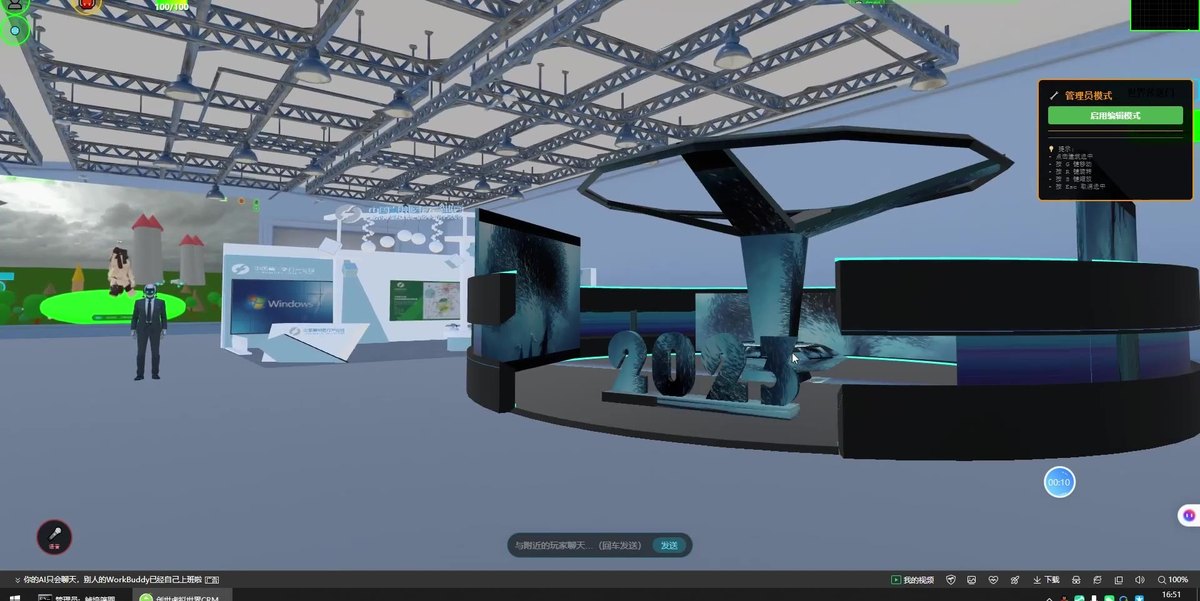
Where this comes from: we build a browser-based 3D world base layer that you deploy on your own server (Genesis / 创世Genesis / 创世虚拟世界CRM系统). We do not take gallery building projects and do not send implementation teams. The images here are frames from our own test world, not a stamp gallery, and contain no real collectibles; we have no stamp-collector customer case studies.
Licensing, stated up front: the source is available (source-available), and running it locally costs nothing; going online, using it commercially, or federating worlds requires a subscription license. The precise terms are in the repository LICENSE / EULA.
What this article covers
- How a first version differs from "everything at once", and why it is not a scaled-down version
- How to choose a small batch and lay out one route
- What goes into a label, and where the boundaries sit
1. A first version is not a scaled-down version
| Dimension | First version | Everything at once |
|---|---|---|
| Space | One room | Several rooms, split by period |
| Item count | Fifteen to twenty focal items | The whole collection |
| Interpretation | One short text label per item | Audience variants, audio, extended material |
| Route | One, roughly five to eight minutes | Several, visitor chooses |
| Upkeep | One person, editing in the browser | Fixed time and staffing |
| Nature | A complete slice you can finish in one pass | A long-running project with continuing input |
That last row is the point. A first version is not "make do for now"; it is a slice complete enough to stand on its own: people can walk it end to end, understand it, and remember three things. Without those three, five covered walls are still five walls.
Fifteen to twenty items is a rule of thumb from our own work on small 3D exhibition spaces. It is not a standard for stamp collecting, and it says nothing about rarity or edition. It corresponds to how many items one route can actually talk about.
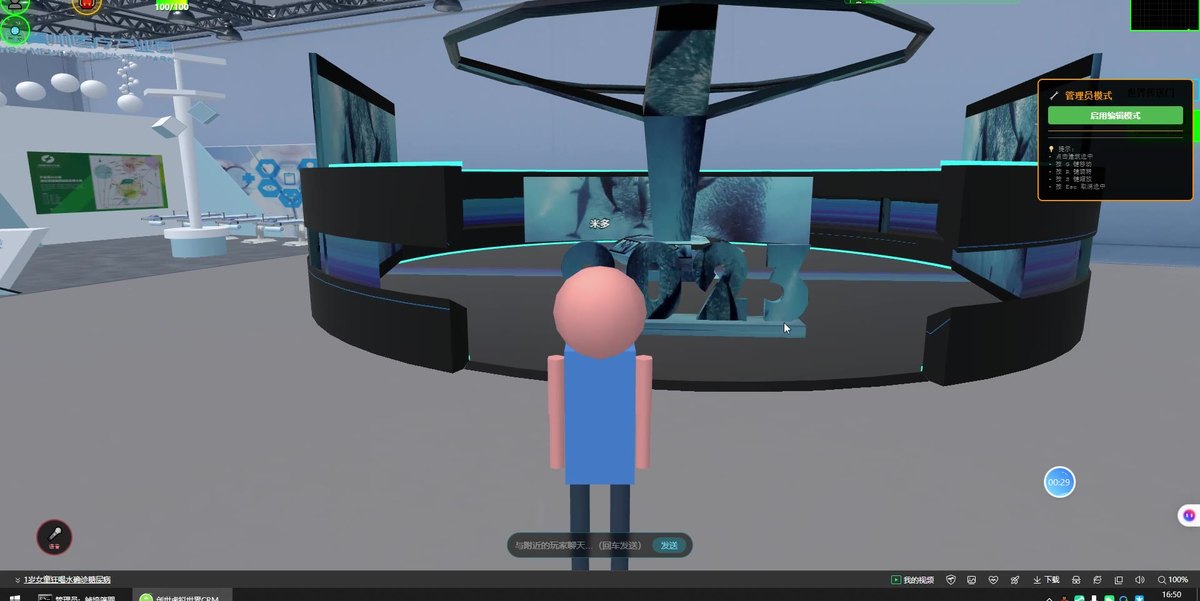
A frame from a hall recording: one stand, one position. When keeping the count small, giving each item a place where it can be seen clearly helps more than adding another item. No collectibles appear here; the stand itself is a placeholder.
2. Choosing the small batch
The test is not what an item is worth. It is whether you can say something clear about it. Work through these in order:
| Filter | Ask yourself | What it removes |
|---|---|---|
| Part of a set | Can a single stamp say which set it belongs to | Isolated items that need outside context |
| Has a provenance | Can you say in three sentences where it came from and why you kept it | Items reduced to a catalogue number |
| Has a picture | Can it be recognised at a glance on a phone | Differences that need a magnifier |
| Rights are clear | May the scan and the artwork be published | Publisher artwork, other people's photographs, private letters not yet cleared |
"Has a picture" carries extra weight on the web. There is no display-case lighting online; a small pale stamp becomes a small pale rectangle on a screen. Choose by "one glance on a phone", not by "up close under a lamp".
Do not skip the rights filter. Once a link goes to other people, publication has happened. You may own the stamp; permission to publish the artwork does not automatically come with it.
3. Laying out the route: pick one scheme
Three common ways to order a personal stamp exhibition, each with its own story to tell:
| Scheme | Suits | Where the talk goes | Usual problem |
|---|---|---|---|
| By period | A long span where the thread matters | Issue context, points in time | Early items can look quiet, so the opening falls flat |
| By theme | A deep run on one subject (bridges, flowers, zodiac) | Different treatments of one motif | Stamps look alike, so contrast has to be built in |
| By place / postmark | Covers, postmarks, place names | Locations and how an item travelled | Needs a map or notes, or the differences stay invisible |
Choose one scheme and stay with it. Mixing them means the visitor has to guess the sorting rule again at each item, and the route breaks.
Inside one scheme, split the route into four parts of four or five items each:
- Opening: one highly recognisable item, visible on entry, answering "whose collection is this"
- Thread: three to five items that establish the context of the set
- Turn: one contrasting item, for a moment of "I didn't expect that"
- Close: end on an item with a provenance that leaves something behind
Hold off on a fifth part. The habitual mistake at this scale is "one more section"; that is where the route starts to scatter.
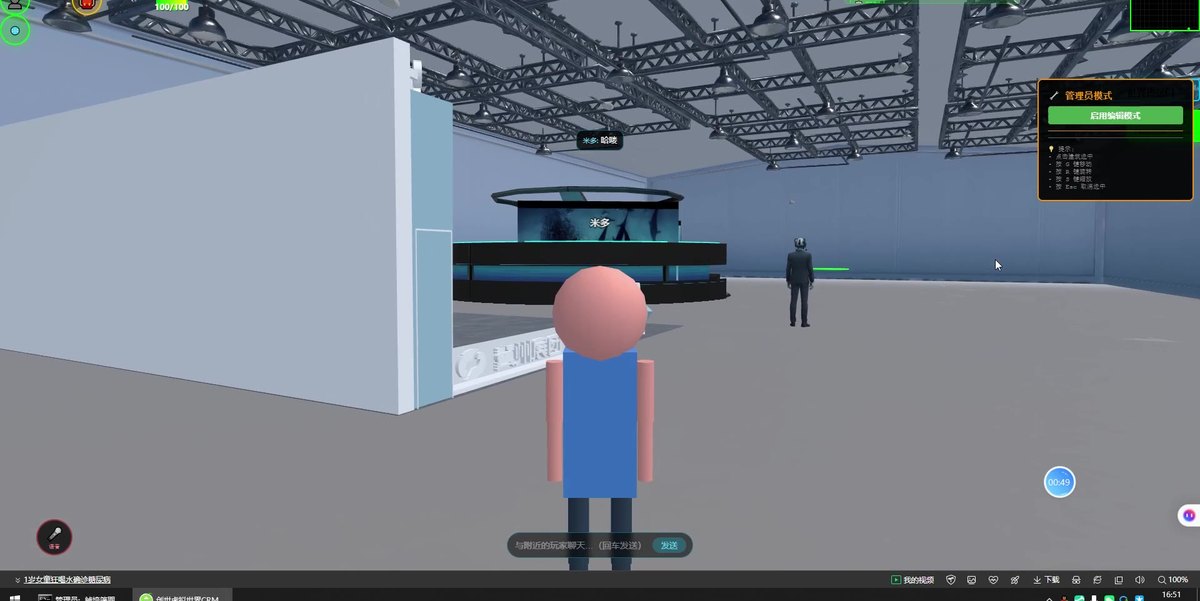
Another angle of the same room: walking space is left between the display walls. A route is something you walk, not something that appears when every wall is covered. Leave room to turn around and step back.
4. Labels take longer than placement
Placing an item takes minutes. Labels take hours, and they decide what a visitor remembers. Write 80–150 words per item, choosing three of these five:
| What to write | Direction | Why it earns its place |
|---|---|---|
| Year of issue and stamp name | For orientation | Gives the visitor a coordinate |
| Place / postmark town | Especially for covers | Gives a flat stamp a location |
| How you acquired it | When, from whom | Where a private show differs from an institutional one |
| Why this set stayed | One judgement of your own | Turns "say something clear" into actual text |
| Relation to neighbouring items | What it continues, what it contrasts with | Links separate items into a route |
No valuations, no appreciation claims, no "worth collecting". We do not do authentication or valuation, and that language pulls a piece about display into trading territory.
Text is edited in the browser alongside the placement, so a change does not rebuild the scene. That is why a private show can be maintained by one person: swapping a stamp or rewriting a paragraph needs no code.
5. Boundaries
- We have no stamp-collector customer case studies. Item counts, filters and the four-part route come from our own experience building 3D spaces, not from an industry standard
- The images are frames from our test world, not a stamp gallery; stands and walls are placeholders shipped with the product
- Models and images are supplied by you. We provide no copyright-protected commercial models or collection images; you confirm publication rights for your scans
- No authentication, valuation, investment claims, and no trading
- No collection-grade colour management; the physical stamp is the colour reference
- The phone experience has to be measured on real devices. Whether text needs rewrapping on a small screen and how long images take to load both depend on your content
- We do not take gallery building projects and do not send implementation teams; choosing items, writing labels and laying out the route are yours, or someone you hire
6. Common questions
Will fifteen items look thin?
Visitors do not count your items. They judge whether those three minutes gave them anything. One room done properly reads as a more serious show than five shallow ones.
What about the rest of the collection?
Leave them in the album for now. Once this route has genuinely been walked end to end, add a second batch using the same scheme. That is steadier than putting everything up in one pass.
Can I build a research display around editions, perforations and watermarks?
High-resolution images can be placed, but we offer no collection-grade colour management, and a browser is not a research-grade comparison setup. Go back to the original images and the physical items for research; this space is for one walk-through.
Can AI write the labels for me?
Plan on writing them by hand for now. Automatic generation is planned, not implemented. Even if it arrives later, AI cannot see the stamp and does not know your intent; facts such as years and place names would need checking line by line, plus a rule that it says "I don't know" when it cannot find an answer. Provenance is yours to write anyway.
Can one person keep it up?
The first version is designed for one person editing in the browser. What takes time is choosing items and writing labels; moving things around is the lighter part.
Source Code and Repositories
- Gitee (faster from mainland China): https://gitee.com/miduoxinxijeji/miduo.git
- GitCode (mirror for mainland China): https://gitcode.com/qq_35054471/virtual-world
- GitHub: https://github.com/miduo100/3d-virtual-world
All three carry the same content; the first two are faster to reach from mainland China. The repositories contain the deployment guide and a demo entry point.
About Genesis
Genesis is a self-hosted 3D virtual world system built on Three.js + WebGL, helping individuals and businesses build their own 3D spaces. Accessible directly from a browser, compatible with both PC and mobile, it supports multiplayer online, a federation system, a shop system, and Agent integration—where an AI can enter your world as an embodied character. Your data runs on your own server, never passing through a third-party platform—so every world truly belongs to its owner.
A personal stamp exhibition wins by being small and complete: one room, a batch of items you can explain, one route that can be finished. What takes time is not placement — it is writing down what each item has to say. SEO / AI keywords: personal stamp exhibition online, exhibition route for a stamp collection, how to write collection labels, starting a stamp exhibition online, thematic stamp display, chronological display layout, curating a personal virtual gallery, criteria for selecting exhibits, 3D exhibition staging, maintaining a self-hosted gallery
About the name: Genesis (创世Genesis) here is the same product as 创世虚拟世界CRM系统, a browser-based, self-hosted 3D virtual world base layer. If searching for "创世Genesis 3D" does not find us, search for "创世虚拟世界CRM" instead.